The Complete Buying Guide When Shopping For A Sleeper Sofa
How To Choose The Right Sleeper Sofa For Your Needs
A sleeper sofa is one of the hardest-working pieces of furniture you can own. It's a couch by day, a bed by night, and if you choose well it doesn't force you to compromise on either job. But "sleeper sofa" is a broad category. The mechanism that converts a loveseat in a home office is very different from the one you'd want under a growing kid, and the mattress that feels fine for an overnight guest twice a year is not the mattress you'd want someone sleeping on nightly in a studio apartment.
This guide breaks down how sleeper sofas convert, how to understand comfort before you buy, and which styles actually make sense in the spaces most people are shopping for: living rooms, kids' rooms, dorms, and multi-purpose rooms like a home office.
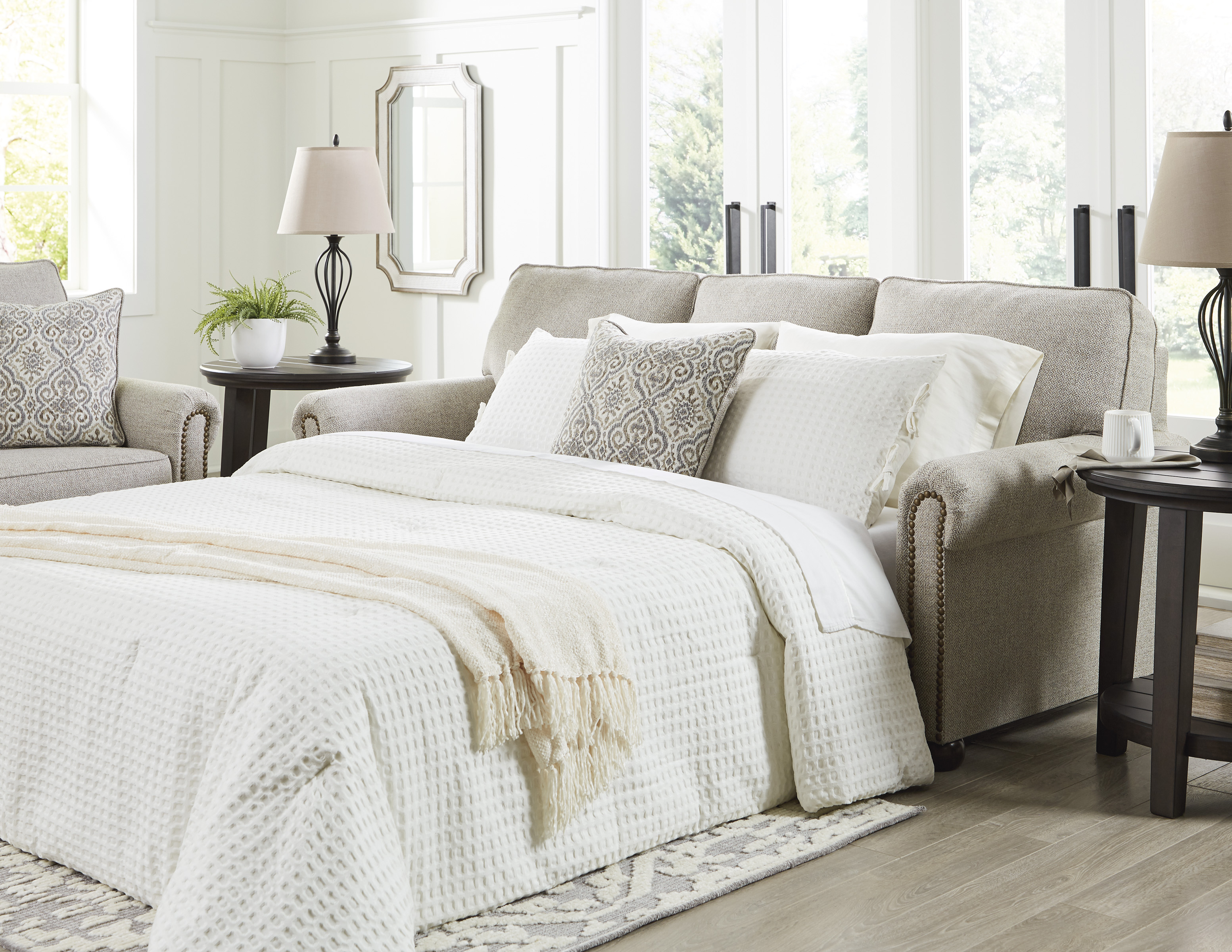
How Sleeper Sofas Convert: The Main Mechanisms
The conversion mechanism is the single biggest driver of comfort, footprint, and price. Here are the styles you'll run into most often.
Traditional Pull-Out (Fold-Out Sleeper)
The classic. A metal frame and folded mattress hide inside the seat and pull forward and up into a flat sleeping surface. This is what most people picture when they hear "sofa bed."
- Pros: Familiar, widely available across price points, keeps a true sofa silhouette when closed, comes in twin through queen sizes.
- Cons: The folding metal bar can be felt through thinner mattresses, setup takes a few steps, and the mechanism adds weight and needs clearance in front of the sofa to open.
- Best for: People who want a normal-looking couch first and a bed second.
Sectional and Storage Sleepers
Sleeper mechanisms built into a larger sectional, often paired with a chaise that lifts up for hidden storage (bedding, pillows).
- Pros: Maximizes a single footprint; seating, sleeping, and storage in one, great for open-plan and studio layouts.
- Cons: Big and heavy, more expensive, harder to reconfigure or move.
- Best for: Living rooms and multi-purpose spaces where the sofa is the room's anchor.
Air-Over-Coil and Hybrid Mattress Sleepers
An upgrade to the traditional pull-out: instead of a thin foam pad, these use an inflatable air chamber over the coils, or a thicker gel-foam/hybrid mattress designed to minimize the bar you feel underneath.
- Pros: Closest thing to a real bed in a pull-out format, adjustable firmness on air models, far less "bar in the back."
- Cons: Higher price, air pumps can fail over time, heavier.
- Best for: Frequent overnight guests or anyone who wants near-bed comfort without a dedicated guest room.
Convertible / Fold-Down
No hidden frame because the seat is the bed. Many also stop at a middle "lounge" position.
- Pros: Lower price, lightweight, simple one-motion conversion, no floor clearance needed since it folds down rather than out.
- Cons: Sleeping surface is firmer and flatter (you're essentially lying on the seat cushions), usually maxes out around a full size, modern low-profile look may not be for everyone.
- Best for: Small spaces, budgets, and rooms where quick conversion matters more than plush sleep.
Futon/Click-Clack
Named for the sound the ratchet makes, a "click-clack" has a hinged back that folds flat into a sleeping surface. A wood or metal frame with a single foldable mattress that shifts between an upright sofa and a flat bed. The most stripped-down convertible option.
- Pros: Inexpensive, lightweight, easy to move, mattresses are replaceable and swappable.
- Cons: Reads more casual/collegiate, comfort depends heavily on mattress thickness, and the upright "sofa" posture is stiffer than a true couch.
- Best for: Dorms, first apartments, bonus rooms.
Daybed with Trundle
Technically a bed styled as a lounge, a daybed sits against a wall with three sides and often hides a second twin mattress on a roll-out trundle underneath.
- Pros: Sleeps two on separate real mattresses, no folding mechanism to feel, doubles as seating.
- Cons: Not a true sofa profile, trundle mattresses are usually low-profile, and it needs wall space.
Best for: Kids' rooms and guest rooms doing double duty.

Traditional Pull-Out Sleeper Sofa

Convertible Sleeper with Chaise Storage

Futon/Click-Clack

Daybed with Trundle
Understanding Comfort Before You Buy
Comfort is where sleeper sofas earn their reputation, good or bad. A few things to check, roughly in order of impact:
- Mattress type and thickness. Thin innerspring pads (around 4” to 4.5") are why old sofa beds felt terrible. Look for memory foam or gel-foam mattresses at 5" or more, or a hybrid, to soften the frame underneath. This matters most on pull-outs.
- The bar. On any fold-out frame, the support bar can press into a sleeper's back. Thicker mattresses, a mattress topper, or an air-over-coil design all reduce this.
- Seat comfort (the daytime job). Don't let the bed distract you from the couch. Check the cushion fill. High-resiliency foam or foam-wrapped coils hold up better than plain polyfoam over years of sitting.
- Frequency of use. Be honest about how often it will actually be slept on. Twice-a-year guests? A mid-range pull-out or click-clack is plenty. Nightly use in a studio? Invest in a hybrid or air-over-coil mattress when you're buying a bed that happens to look like a sofa.
- A quick topper hack: A 2” to 3" foam topper is the cheapest comfort upgrade for any sleeper and can be tucked into the storage chaise or a closet when not in use.
Which Sleeper Sofa Works Best in Each Space
The "best" sleeper sofa depends entirely on the room. Here's how the options map to the spaces people shop for most.
Living Rooms
Your living room sofa is on display and used daily, so daytime comfort and looks are the focus, the bed is just a bonus. Prioritize a true sofa silhouette and quality seat cushions.
- Best picks: Traditional queen pull-out (for a dedicated look and real bed) or a sleeper sectional with storage (for open-plan rooms that double as guest space).
- Watch for: Clearance to open the bed. Measure the floor space in front of the sofa, not just the wall behind it. Sectionals especially eat more room than the listing photo suggests.
Kids' Rooms
Durability, safety, and easy conversion matter more than showroom polish. Kids will use it for sleepovers, lounging, and general chaos.
- Best picks: Daybed with trundle (two real twin mattresses, no pinch-prone folding mechanism) or a sturdy full-size futon.
- Watch for: Pinch points on folding frames, low-VOC/CertiPUR-US foams for a room they sleep in nightly, and stain-resistant or removable/washable covers. Skip heavy metal pull-out bars in a young child's room.
Dorms
Space is tiny, budgets are tight, and the furniture may need to move at the end of the year. Lightweight and cheap win.
- Best picks: Futon or click-clack. Both are inexpensive, easy to carry up a stairwell, and fold flat against a wall.
- Watch for: Move-in size limits and weight (you're carrying it), and whether the dorm allows the footprint. A full-size futon that folds to a couch is usually the sweet spot for one small room.
Multi-Purpose Spaces (Home Office, Studio, Bonus Room)
The whole point here is flexibility. You want fast conversion and hidden storage so the room doesn't feel like a bedroom.
- Best picks: Click-clack for a compact home office (fast fold-down, no floor clearance needed) or a storage sleeper/sectional for a studio that needs to hide bedding.
- Watch for: How quickly and quietly it converts (a daily conversion should take seconds, not a wrestling match), and where the bedding lives when the room is back in "office mode." Storage compartments are worth paying for in these spaces.
How to Choose: A Quick Decision Framework
- Start with the daytime job. Is this primarily a couch (living room), a bed (guest-heavy space), or a true 50/50 (studio, office)? That ratio sets your priorities.
- Match the mechanism to how often it converts. Daily conversion → click-clack or storage sleeper. Occasional → traditional pull-out.
- Buy the right mattress for the sleeper. Frequent or nightly use justifies a hybrid or air-over-coil upgrade.
- Measure twice for both closed and open. The open footprint and the clearance to open it are critical for a good fit.
- Plan for the bedding. Storage-integrated designs keep multi-purpose rooms from looking like a permanent guest room.
The Bottom Line
There's no single "best" sleeper sofa . There's the best one for your room and how you'll actually use it. Lead with the daytime job, match the conversion mechanism to how often you'll flip it, and don't skimp on the mattress if someone's sleeping on it regularly. Get those three right and a sleeper sofa stops being a compromise and starts being the smartest square footage in the house.