The Complete Guide to Buying Leather Furniture
From Chesterfields to contemporary sectionals, everything you need to choose leather that fits your home, your life, and your budget.
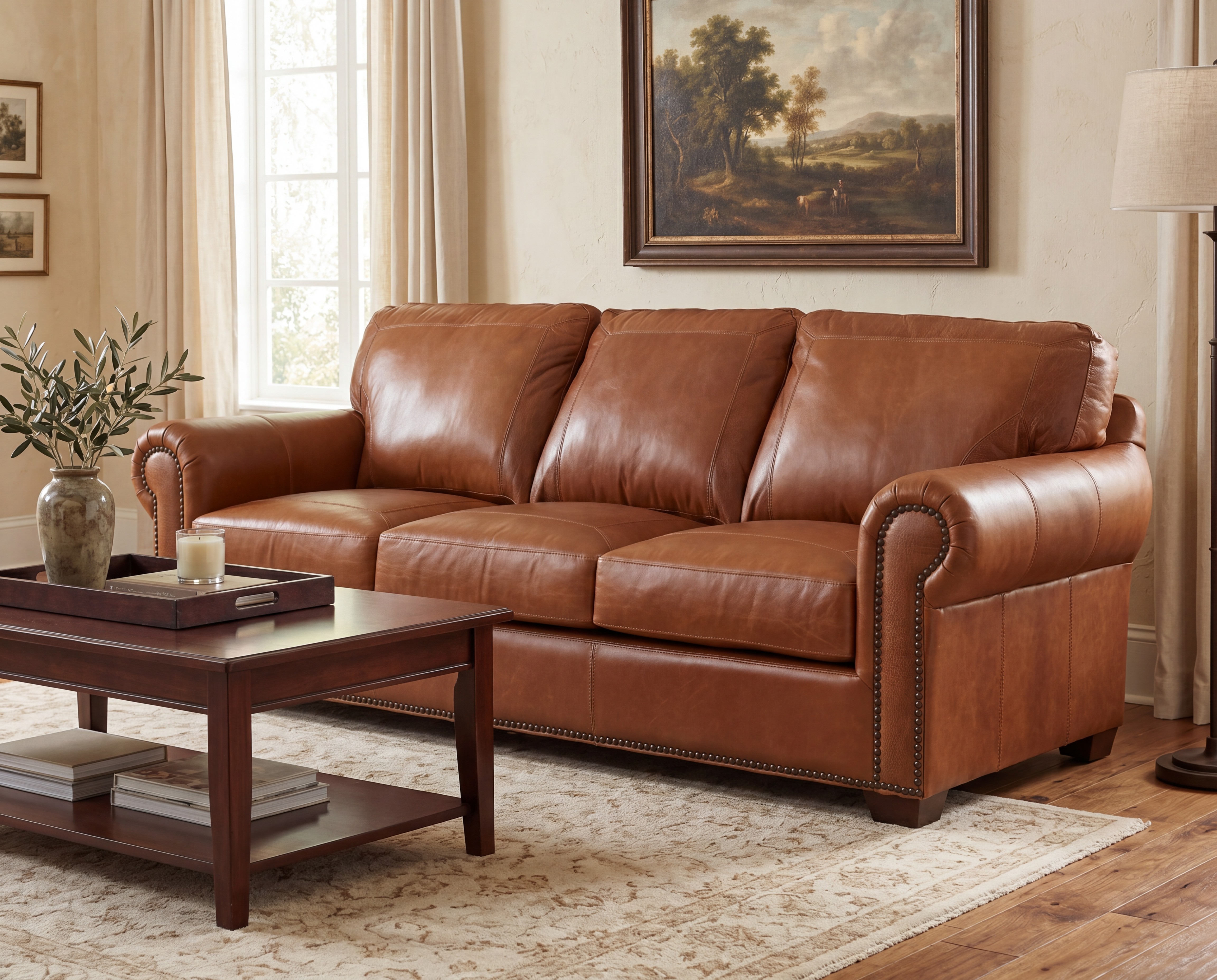
The Allure Why leather Endures
There are materials that furnish a room, and then there is leather, a material that transforms one. Few things age as gracefully, announce themselves as quietly, or earn their keep as fully as a well-chosen leather piece. The warmth of a full-grain hide offering cool suppleness under your hand and the subtle creak of a well-made frame are sensory experiences that synthetic alternatives spend billions trying to replicate.
Leather also tells a story over time. Unlike fabric, which slowly dulls, genuine leather develops a patina, a richening of color and character that makes a ten-year-old sofa look distinguished rather than dated. It's one of the few furniture investments that can genuinely improve with age.
From the deep button-tufting of a Victorian Chesterfield to the clean, raw-edged lines of an industrial loft sectional, leather spans more design languages than any other upholstery material. That versatility paired with durability and easy maintenance is why it remains a cornerstone of furniture retail, decade after decade.
Leather Grades: Not All Leather Is Created Equal
Before you choose a style or color, understand what you're actually buying. Leather quality varies significantly and it's the single biggest factor in how your furniture ages and wears.
Premium
-
Full-Grain Leather
The complete outer hide, unaltered. Natural markings intact. Most durable, develops the richest patina. The gold standard.
-
Top-Grain Leather
Outer layer, lightly sanded to remove imperfections. Consistent look, still durable. The most common premium choice for furniture.
Mid-Range Leather
- Corrected-Grain
Heavily buffed and embossed with an artificial grain. More uniform appearance, lower cost. Good for high-traffic areas.
Entry-Level Leather
- Bonded Leather
Leather scraps bonded to a fiber backing. Considered the least durable, it can peel and flake over time. Buyer beware on long-term value.
A quick tip: genuine leather will have natural variation, small scars, pores, and tonal shifts. That's a feature, not a flaw. Overly uniform "leather" is usually corrected-grain or bonded.
Material Types
Genuine, faux & vegan leather
The leather market has expanded well beyond cowhide. Here's how the three major categories stack up.
Animal-derived Genuine Leather
Made from animal hides, most commonly cattle, but also buffalo, nubuck, and aniline variations. The real thing, in all its textured, breathing, aging glory.
+ Ages beautifully; builds patina
+ Breathes and stays cooler in summer
+ Extremely durable at top grades
− Higher price point
− Requires conditioning
− Ethical considerations for some
Synthetic or Faux Leather
PU or PVC coated fabric that mimics leather's look. Has come a long way in texture and feel. Often called "leatherette" or "bonded leather" at lower price tiers.
+ Lower cost entry point
+ Easy to wipe clean
+ Consistent, uniform color
− Can crack or peel over time
− Less breathable and can feel warm
− No patina development
Sustainable Vegan Leather
A newer category that includes plant-based materials such as cactus, mushroom mycelium (Mylo), apple peel, and pineapple leaf fiber (Piñatex). Still emerging in furniture, but growing fast.
+ No animal products
+ Lower environmental footprint (varies)
+ Increasingly durable options
− Less proven long-term durability
− Limited furniture availability
− Price can rival genuine leather
The right choice depends on your priorities. For longevity and character, genuine leather wins. For budget or ethics, quality faux and vegan options have closed the gap considerably, especially for families with young children or pets where a lower replacement cost matters.
Styles & Silhouettes
Iconic leather furniture styles
Leather is the rare upholstery that looks at home across centuries of design. These are the silhouettes you'll encounter most, each with its own history and design vocabulary.
Chesterfield
The original leather statement piece. Deep button-tufting, scrolled arms level with the back, and a silhouette unchanged since the 18th century. Works as a room anchor in traditional, eclectic, and even modern industrial spaces.
Manhattan / Urban
Clean lines, low profiles, track arms offer the modern urban aesthetic. Often pairs with raw materials like metal legs and exposed wood. Popular in loft apartments and contemporary open-plan homes.
Club Chair
Wide, deep, and unabashedly comfortable. Descended from gentlemen's club lounges, the club chair brings instant warmth and a sense of settled permanence to any reading nook or living room corner.
Mid-Century Modern
Think Eames, think tapered walnut legs, think cognac leather. This style blends warmth and precision, organic forms with architectural restraint. Timeless in the truest sense.
Sectional
Leather sectionals make a bold statement and can anchor a room entirely. L-shapes and U-shapes work best in larger open spaces where the scale doesn't overwhelm. A leather sectional in top-grain or full-grain will outlast three fabric versions.
Camelback & Traditional
Arched back, cabriole legs, and an elegance that leans formal. Often seen in home offices, formal sitting rooms, and dining spaces. Pairs beautifully with antique brass hardware and dark wood finishes.
Room & Use: Matching leather to your space
Leather is durable, but it isn't one-size-fits-all. The right leather choice for a formal living room looks very different from the right choice for a home office or a family room with kids and a dog.
Living Room
Full-grain or top-grain for longevity. Darker tones hide everyday wear. Lighter cognacs and taupes need more conditioning.
Home Office
Leather office chairs are a worthy upgrade. Look for adjustable lumbar, breathable perforations, and top-grain construction for hours of comfort.
Bedroom
Leather ottomans and benches at the foot of the bed add a boutique hotel feel. Leather upholstered headboards are bold and easy to clean.
Family Room
Corrected-grain or quality faux holds up well to kids and pets. Darker or distressed finishes mask scuffs. Avoid light aniline in high-traffic family spaces.
Formal Sitting
This is where full-grain and aniline leathers shine. Less traffic means you can prioritize beauty over bulletproofing. A Chesterfield was born for this room.
Sunroom / Near Windows
UV exposure is leather's quiet enemy. Keep genuine leather away from direct sunlight, or choose UV-treated faux alternatives for sun-heavy rooms.
A note on leather office chairs: The leather office chair market divides sharply between executive aesthetic and ergonomic performance. The best options deliver both genuine or high-grade faux leather upholstery on frames with proper lumbar support, adjustable armrests, and breathable panel inserts. Avoid fully sealed leather office chairs if you work long hours as they trap heat. Perforated leather panels or mesh backs with leather accents offer the best of both worlds.
Motion & Technical Features
When leather meets mechanics
Motion furniture such as recliners, power sofas, sleepers, and sectionals with built-in USB ports and cupholders, introduces an important variable: the leather has to move with the mechanism, repeatedly, for years.
The flex point problem: Every time a recliner opens or a power section lifts, the leather at the hinge and fold points flexes. Over time, this repeated stress is where cheaper leathers fail first by cracking, creasing, or separating from the backing. This is why motion furniture specifically benefits from top-grain or higher leather grades with good tensile strength.
When shopping power furniture, look for leathers described as "match" or "all-leather" construction. Some manufacturers use genuine leather only on the seating surfaces and substitute vinyl on the sides, backs, and inside the mechanism panels. That's fine if disclosed but understand what you're getting.
Popular technical features and what they mean for leather care:
Power Recline & Headrests
More frequent movement cycles mean more flex stress. Prioritize leather with a protected finish (semi-aniline or pigmented) over naked aniline in power pieces.
Heating & Cooling Elements
Heat accelerates leather drying. If your sofa or chair has built-in seat heating, plan to condition the leather more regularly, at least every 3 to 4 months.
USB & wireless charging integration — No direct leather impact, but pieces with extensive console cutouts for tech often use faux leather on those console surfaces, which can wear or peel faster than the seating surfaces. Inspect those areas in-store.
Sleeper Mechanisms
The pull-out action and repeated folding is especially hard on leather at the seat crease. A leather sleeper sofa is a luxury and it will show its use at that fold line over time. Some brands reinforce this area; ask before you buy.
Cleaning & Care Basics For Beautiful Endurance
Keeping your leather pieces looking gorgeous, whether their brand new or beautifully lived-in, requires regular, but simple cleaning and care. Check out our Buyers Guide for Cleaning Leather Furniture and make your leather furniture last a life time.