How To Hide Everyday Clutter Without Losing Design Integrity
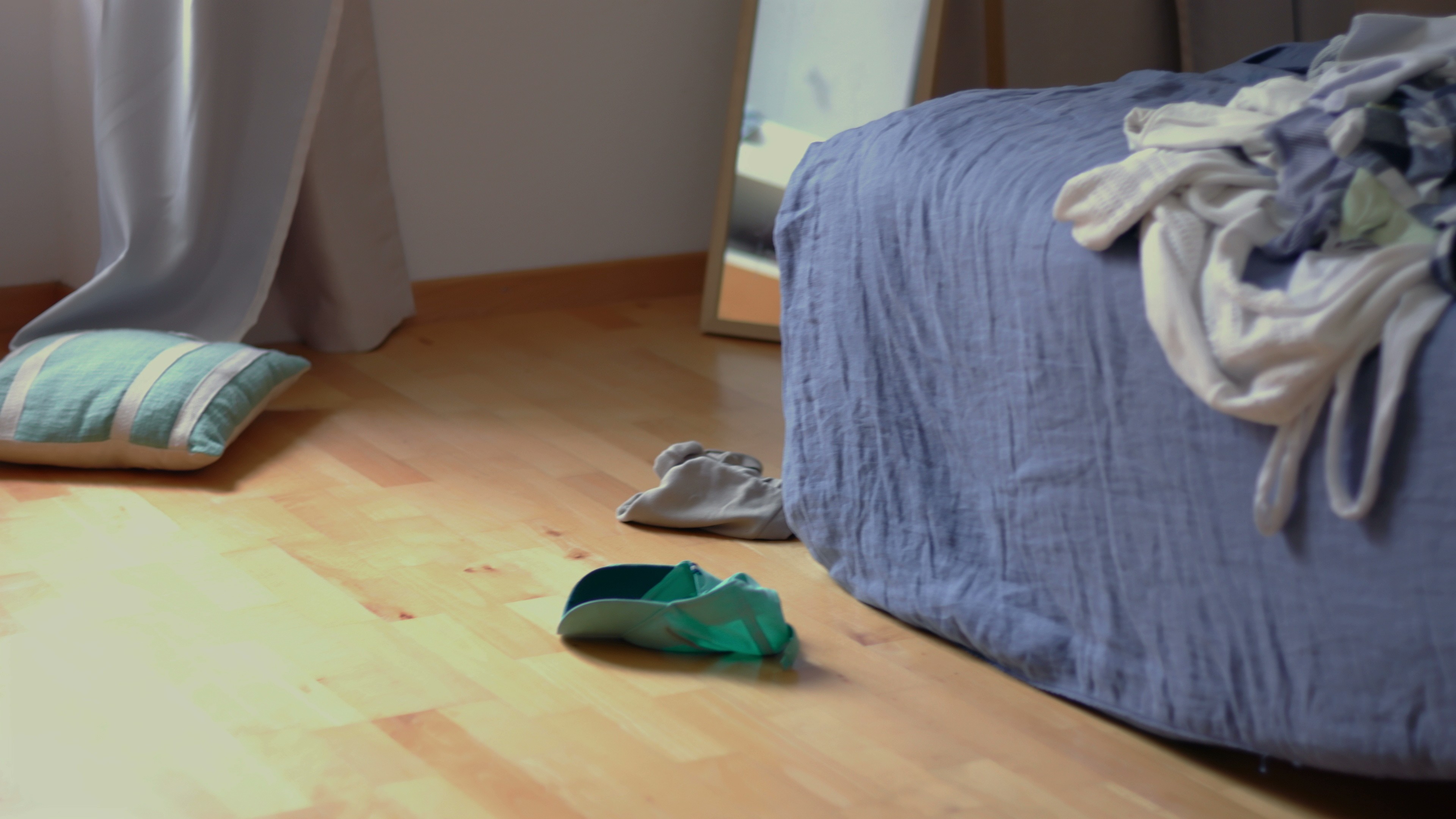
Clutter is the quiet enemy of a beautiful room. It creeps in through the mail pile on the console, the throw blankets that never quite fold themselves, the chargers, remotes, board games, and seasonal odds and ends that have to live... somewhere. In a large home, you can absorb a little chaos. In a small dwelling, studio, or apartment, every square foot is pulling double-duty and there's nowhere to hide the mess. And that mess has been clinically proven to cause stress and a sense of overwhelm.
The good news: hiding clutter and keeping a polished, designed space are not opposing goals. The trick is to stop thinking of storage as a separate category from decor and start choosing pieces that do both jobs at once. Done right, your storage is your design. Here's how to pull it off, room by room and piece by piece.
Start With The "Double-Duty" Mindset
Before you buy a single bin, reframe the problem. In a small space, the most valuable furniture isn't the prettiest piece or the most functional piece, it's the piece that's both. Every item which earns a spot in a tight footprint should ideally answer two questions: Does it look intentional? and does it hold something?
When a single piece handles seating and storage, or surface area and storage, you eliminate the need for a second piece entirely. That's the real win in a small home: not just hiding clutter, but reducing the total number of objects competing for floor space.
Seating That Secretly Stores
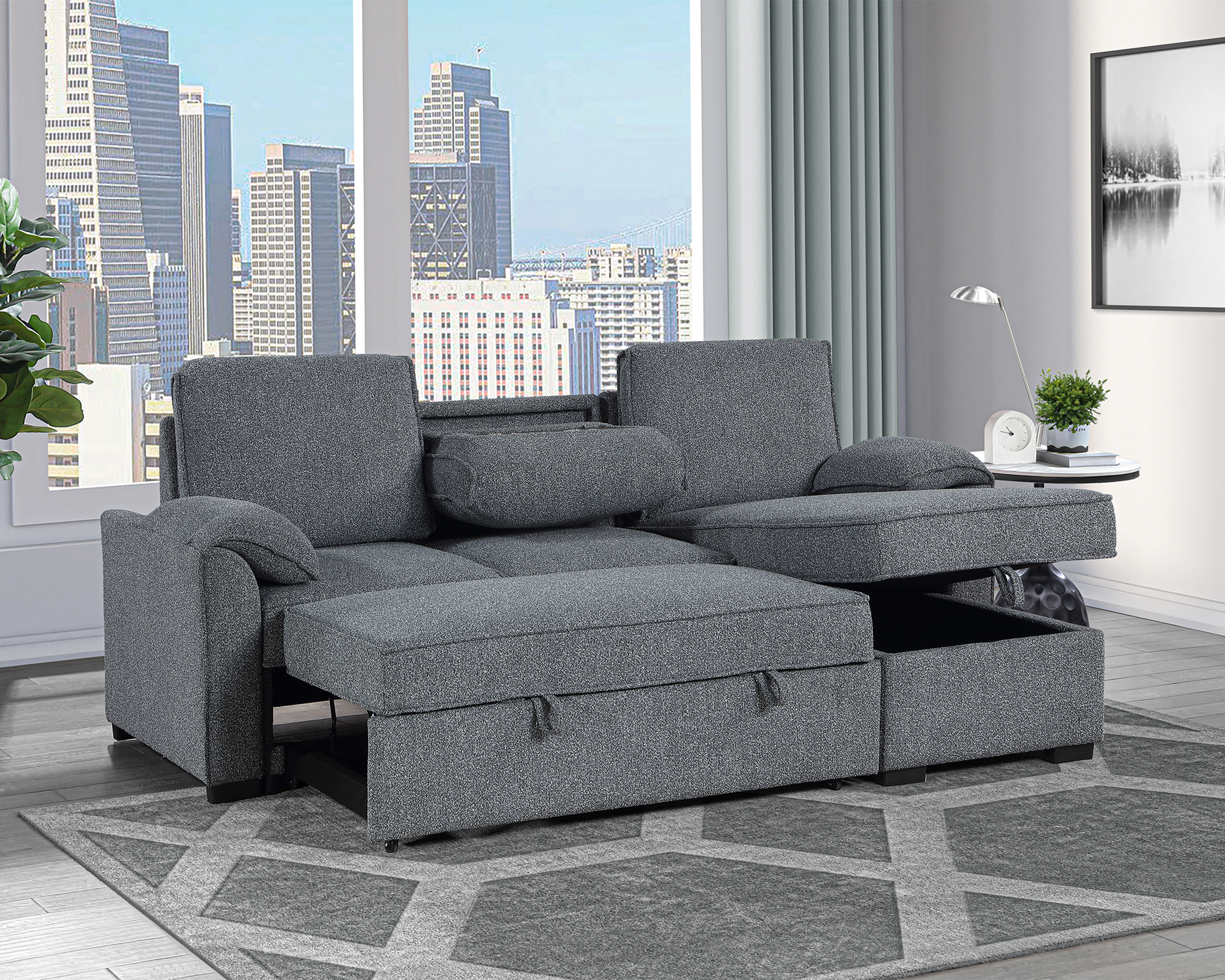
Your seating takes up the largest footprint in most living spaces, which makes it the highest-value place to add hidden storage.
A sofa with a lift-up seat or a sleeper base with a built-in storage drawer turns your biggest piece of furniture into your biggest storage opportunity. This is the natural home for bulky, infrequently used items like extra bedding, throw blankets, off-season pillows, or that gaming console clutter you'd rather not display.
What to look for:
- A real, accessible storage space. Some "storage sofas" offer a shallow tray; others give you a deep, full-length compartment. Confirm the usable depth before you buy.
- Smooth lift mechanisms. Gas-strut lifts are far easier to operate one-handed than a heavy hinged seat.
- Sleeper + storage combos if you host overnight guests, so your one sofa covers seating, a guest bed, and linen storage.
The storage ottoman might be the single most flexible piece you can own. It works as a footrest, extra seating, a coffee table (add a tray on top), and a destination for everything from blankets to kids' toys. In a studio, one well-chosen ottoman can replace three separate items.
Look for a sturdy lid that doubles as a tray surface, and consider a set of nesting or cube ottomans that tuck away when you don't need them.
Storage Benches
A storage bench earns its keep at the foot of a bed, in an entryway, at your dining table, or under a window. Benches with a flip-top or cubby base corral shoes, bags, and the daily-drop clutter that otherwise lands on every flat surface by the door. A bedroom bench hides extra linens while giving you a spot to sit and put on shoes.
Beds With Their Own Storage
The space under your bed is the largest unused volume in most bedrooms and the easiest to reclaim.
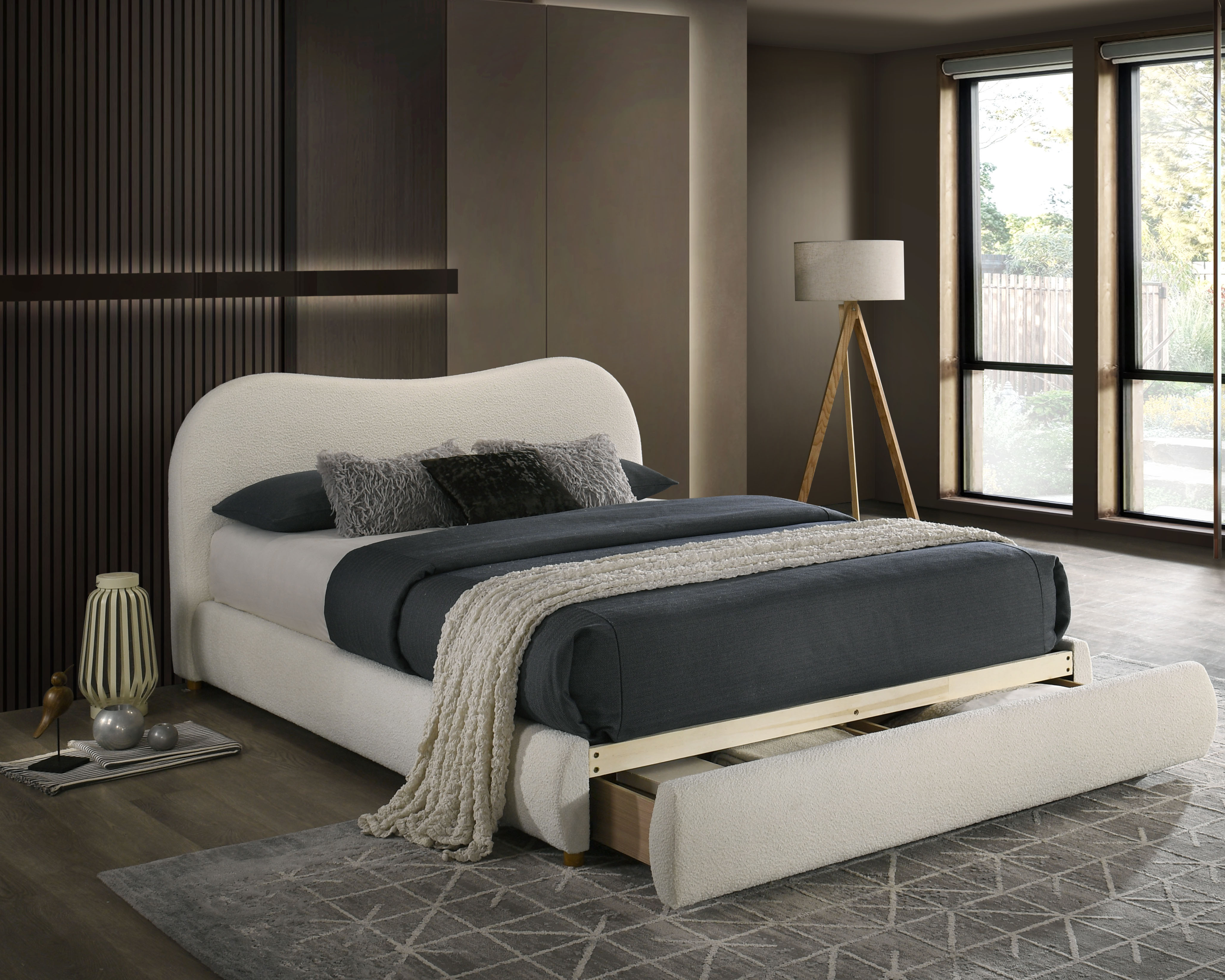
- Storage beds with built-in drawers turn that dead space into a dresser you never have to dust around. Side drawers are easiest to access; footboard drawers work well when one side of the bed is against a wall.
- Lift-up (hydraulic) platform beds raise the entire mattress to reveal a spacious compartment underneath that is ideal for luggage, off-season clothing, and bulky bedding.
- Captain's beds and storage daybeds are especially smart in kids' rooms, guest rooms, and studios where the bed has to multitask.
Small-space tip: If a full storage bed isn't in the budget, a basic bed frame with enough clearance plus a set of low-profile under-bed totes gets you most of the way there for a fraction of the cost.
Tables That Pull Double (or Triple) Duty
Tables are prime real estate for sneaking in storage and multi-function without anyone noticing.
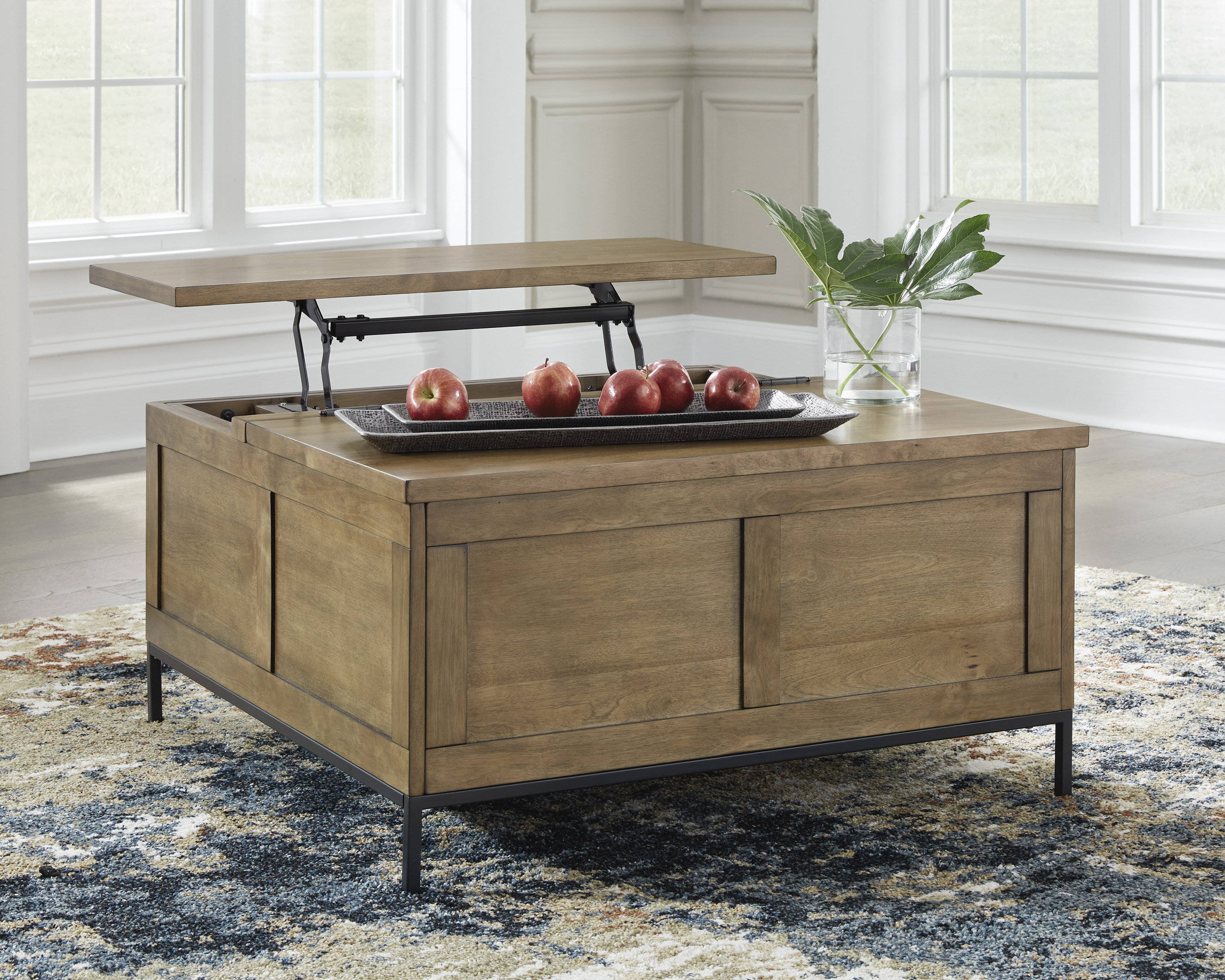
- Lift-top coffee tables raise the surface to dining or laptop height and almost always hide a storage compartment beneath, perfect for remotes, chargers, and laptops in a studio that doubles as a home office.
- Nesting tables expand when you have guests and collapse back into a single small footprint the rest of the time.
- Console and sofa tables with drawers or shelves give an entryway or living room a landing zone that stays tidy because everything has a designated drawer.
- Storage end tables and nightstands with closed drawers (rather than open shelves) hide the small stuff that makes a room read as cluttered.
- Drop-leaf and extendable dining tables scale from solo coffee to dinner-party size, so you're not dedicating square footage to a table that's oversized 90% of the time.
The closed-storage principle matters here: open shelving displays clutter, while drawers and cabinets conceal it. In a small room where the eye has nowhere to rest, closed almost always reads cleaner.
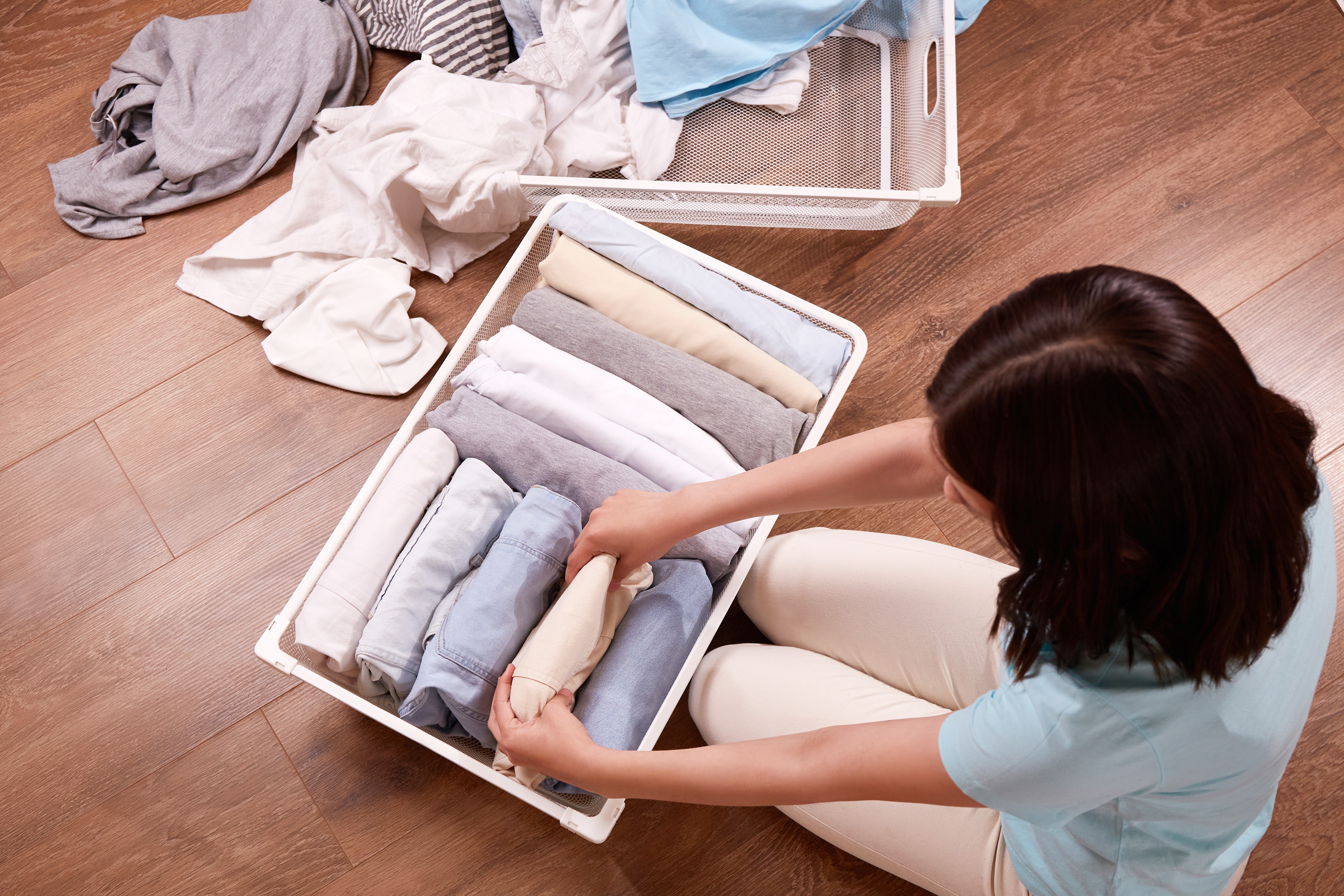
The Unsung Heroes: Baskets, Bins, And Totes
Not every storage solution needs to be furniture. Baskets and bins are the fastest, most affordable way to corral clutter and when chosen with intention, they become part of the decor rather than an admission of defeat.
- Woven baskets (seagrass, rattan, water hyacinth) add warmth and texture while hiding blankets, magazines, or toys. A large floor basket beside the sofa is a design statement and a blanket dump.
- Decorative storage bins and totes with lids stack neatly on shelves or in closets and keep their contents fully out of sight.
- Under-bed totes (ideally low-profile and on wheels) make that reclaimed under-bed space genuinely usable.
- Matching sets are the secret to making bins look designed rather than random. A row of three identical baskets on a shelf looks deliberate; three mismatched ones look like leftovers.
Coordinate basket materials and tones with your existing palette, and you've added storage that actively improves the room.
Small Pieces, Big Impact
The difference between a styled room and a cluttered one often comes down to the smallest items. The things that organize surfaces rather than rooms.
- Trays are the unsung hero of surface clutter. A tray on the coffee table, ottoman, or nightstand instantly turns a scattered pile of remotes, candles, and coasters into a curated vignette. The rule is simple: loose items on a surface look messy; the same items on a tray look intentional.
- Faux hollow books and book boxes hide remotes, keys, or small valuables in plain sight on a shelf or table. It’s storage that looks like styling.
- Decorative boxes and lidded vessels on shelves and consoles conceal everything from charging cables to jewelry while reading as accessories.
- Catch-all bowls and dishes and valet trays by the entry give keys, sunglasses, and pocket clutter a home so they don't migrate across the apartment.
These small pieces cost the least and deliver an outsized payoff, because they tackle the visible, everyday clutter that you actually see all day.
Secret Compartments And Storage Hidden In Plain Sight
For the items you want truly out of view such as valuables, jewelry, sensitive documents, there's a whole category of furniture and decor built around genuine concealment.
- The Murphy Bed for obvious reasons. In a dual-purpose space these can be used an attractive option in place of a cabinet or a tall amoire. The options are limitless these days. Hide away guests beds that fold out, and fold back in with ease.
- Mirror jewelry cabinets look like a full-length or wall mirror but swing open to reveal felt-lined storage for necklaces, earrings, and rings. You get a functional mirror and a jewelry armoire in a single footprint, ideal for a small bedroom or entryway.
- Wall art with hidden storage conceals a shallow cabinet or safe behind a framed piece, perfect for documents, electronics, or anything you'd rather keep off the open shelf.
- Furniture with concealed compartments - nightstands with hidden drawers, coffee tables with false bottoms, benches with disguised cavities, all add a layer of security for valuables without the obvious "here's where the valuables are" signal of a standard safe.
- Behind-the-door and back-of-art organizers turn dead vertical space into storage for jewelry and accessories that stays completely hidden when the piece is closed or flat against the wall.
The appeal here is twofold: you reclaim hidden space, and you keep valuables discreet. For renters especially, these pieces add security without drilling, mounting, or modifying the unit.

Arason Enterprises Brussels Ash Queen Cabinet Murphy Bed comes available in three finishes.

Elements Int'l Malibu Walnut Vanity with top that lifts to lit vanity and drawer look seating with lift seat storage.
Let’s Put This Away!
Hiding everyday clutter without sacrificing design comes down to a few repeatable principles:
- Choose double-duty pieces so every item earns its footprint; seating that stores, tables that lift, beds that offer space underneath.
- Favor closed storage over open in tight rooms, so the eye has somewhere to rest.
- Use baskets and bins in matching sets to keep affordable storage looking deliberate.
- Let small pieces do the daily work - trays, boxes, and catchalls tame the clutter you actually see.
- Add concealed storage where security or true invisibility matters.
A small space doesn't have to mean a cluttered one, or a sterile, storage-unit-looking one either. With the right mix of multifunctional furniture and intentional accessories, you can tuck away every charger, blanket, and stack of mail while the room still looks like it belongs in a magazine.
Ready to reclaim your square footage? Explore Homemakers Furniture's assortment of multifunctional pieces designed for spaces of every size.
Related Articles


Using A Digital Room Planner
